


Paleokastritsa is located in the northwest part of the island and is very famous for its natural beauty. It consists of two peninsulas and five small bays. Some of them have pebble stones while others are sandy. You can enjoy your swim in any one of them.
The area is ideal for diving, which you can do with organized diving schools or on your own with a snorkel. You can participate in water sports and rent lounges and parasols. From the central beach you can enjoy a trip by boat and visit the caves of the area, e.g. the cave of Nausika, the blue eye and the cave of Ai Nikolas. You can also rent a private boat and go on an excursion to beautiful and romantic beaches which can be approached only by boat.
Platakia is covered mostly by shingle and is the ideal place for the warm days of the summer.
La grotta has taken its name from the italian word “cave”. it is a famous for the crystal clear blue waters make this spot unique.
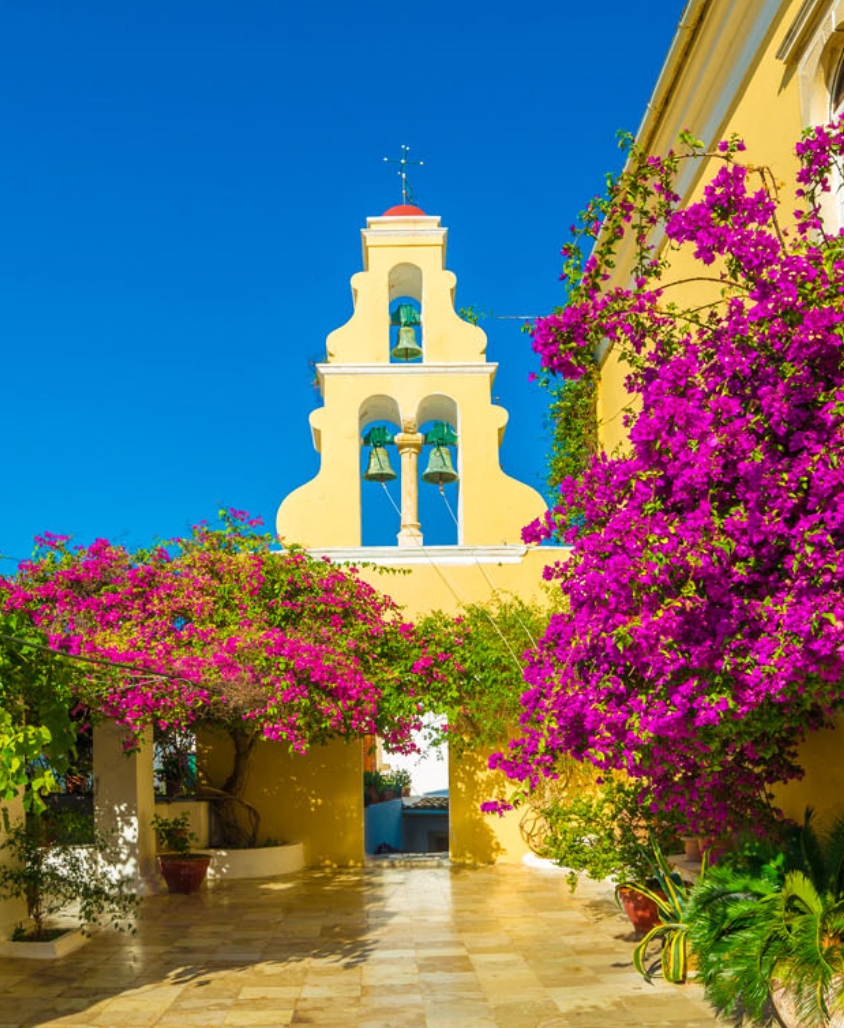
At the top of the rock is the monastery of paleokastritsa dedicated to the virgin mother and dating from the 18th-19th century. you can visit it daily. it is an excellent example of greek monasterial architecture. it has a yard with domes and a small byzantine museum with byzantine and post-byzantine icons. the view from the monastery is wonderful.
Angelokastro, a byzantine fortress located at a seemingly inaccessible peak. in order to go to the castle, we follow the road to the village of krini. the view from the rock’s peak is panoramic and reaches the city of corfu. angelokastro was the westernmost guard of the despotate of epirus. the castle is also known as castle michel angelo thus preserving the name of its creator, michel the 2nd despot of epirus. it is located at a rock at an altitude of 160m, bathed by the sea, and has only a narrow path connecting it to the mainland. the church of archangels is located at the top and the church of agia kyriaki inside a cave. there is also a hermitic cell and a pilgrimage site.